
(No AI was used in writing this article)
One of the best descriptions I’ve ever heard of the various Marxist tainted “identity politics” groups we find about us these days, and Marxist oriented people in general, is that they are “hounds for oppression.” In other words, they are “fans or enthusiasts” of oppression (the definition of “hound” I’m using in this context). They can find it under every rock. By this I don’t necessarily mean that they like oppression, but that they, in a weird way, need it; it must exist for them. Why that would be is the subject of this essay, which has a great deal to do with the concept of “Responsibility.” Allow me to explain.
Life, for humans on this planet, can be a complex affair. Of that there is no doubt. But amongst the complexities it can be observed that those who successfully live and survive well usually have a strong purpose or goal they are pursuing—they have something they are trying to do or accomplish, and this motivates them. Such a purpose is always self-determined, not enforced by another, and it keeps one interested in life and willing to experience its inevitable ups and downs. This is so true, that it could be said that real living consists of having such a purpose AND following it. Along with this comes the observation that people are usually the happiest and have the highest morale when they are “on purpose” and going for the goal. When it comes to living life, these things are foundational.
Relative to this, there are a couple more important concepts to grasp, and these are embodied in the words “Cause” and “Effect”. The embracing goal of all humans is survival, but individuals, in keeping with their education, interests and abilities, select different routes to attain it. The survival route selected and pursued by an individual IS that person’s purpose. In pursuing a purpose or goal, in attempting to accomplish anything, one seeks to be “cause” to create the “effects” required to attain the goal. To the degree one is successful one is at “cause” and to the degree one fails one is at “effect.” This is the game of life we are all engaged in: striving to be cause in overcoming the barriers to the attainment of our goals and purposes, while striving to avoid being effect. A person’s success in life has a great deal to do with their tolerance toward the barriers encountered in the pursuit of their goal or purpose. Any goal, to be a goal, has barriers to its attainment, otherwise it would already be accomplished. Thus, in choosing a goal or purpose one is also choosing the barriers to it, whether he knows it or not. If that person decides he cannot tolerate the barriers encountered, it’s at that point that he fails; ceases to be cause and becomes effect. Another person, encountering the same barrier, might be temporarily stopped, but instead of deciding he has failed, he steps back, re-observes the barrier, gathers more information, reevaluates his approach to the barrier, implements a new strategy and ultimately overcomes it. THAT is successful living, and within and from that process is derived our interest, morale and joy in life.
Now, in the example just mentioned what is the key difference between the person who encounters a barrier and fails, and the other who encounters a barrier and eventually succeeds at overcoming it? That difference can be summed up in one thing: the first person himself decided he failed, whereas the other person never did, and so remained at cause instead of effect. Many of the supposed differences we observe in people relative to their success in life boil down to this one factor—that person’s decisions. In truth, our conditions in life are dictated by the decisions we make. Our lives are the way they are because we decided they are that way. That’s the simplicity of it, and this fact explains a lot. For instance, I completely agree that the injustice of racism is bad and should be eliminated from our society, but why is it that people like Denzel Washington and Morgan Freeman, who are as black as any other black person, are vastly successful, while other black people may not be? Did racism not exist for them? The same question can be asked of successful women, successful gay people, successful fat people, or any other category of political identity. The answer is simple—they never agreed they were stopped and they never agreed they failed. They stayed at cause and eventually overcame the barriers, whether racist, sexist, homophobic in origin or otherwise. And the same applies to any other group or “identity politics” category that considers itself oppressed.
You may be asking what all this has to do with my use of the “R” word (responsibility) in the title of this piece, and so we will address that now. (Please consider what we covered already as necessary preamble.) We’ll start with a definition of “responsibility” you may not be familiar with, but it’s the best definition for the word I’ve ever found, and so I’m sharing it with you. That definition of “responsibility” is, “recognition of cause.” Anything a person is willing to have caused he can be responsible for. Conversely, if he is not willing to have caused it, he will not be responsible for it. When a person “fails” at accomplishing or doing something they will often place the fault at another’s door and blame them. Whenever they do this, they are abdicating their own responsibility and are saying to themselves, “that opponent, barrier or thing is ‘cause’ and I am ‘effect.’” In blaming another for our being stopped or failing, we are not recognizing our own cause in the matter, which most assuredly exists. We are the ones who decided on that purpose and course of action, AND we are the ones who decided we failed. We have all done this, and every time we did, by saying that the barrier or opponent is cause and we are effect, we weakened ourselves and empowered the opponent/barrier. That’s on an individual level. The trouble with the various Marxist oriented people and groups we see around is that they have institutionalized blame and made it a pillar of their philosophy, placing fault on entire classes or groups of people. With no “oppression” they have nothing to blame, so they seek it out in everything, whether it is actually there or not.
In summing up, let me say that you, me and all of us are far more powerful than we generally acknowledge. We are the prime cause of whatever successes we’ve had, and we are the prime cause of our failures. Far from being a bad thing, that fact, understood and applied, puts our lives under our own control, and that is where it should be. Further, beyond securing the natural rights of ALL people, the type of society we should have is not one that concentrates on wiping out all sources of oppression; all things we blame for our failures, but one that ensures we all have the freedom to choose and pursue our survival goals and purposes. If we then pursue those goals and purposes “responsibly” the entire society benefits.
And isn’t that what we all want?

Note: Much of the knowledge and information in this article is taken from the subject of Scientology and the works of its Founder, L. Ron Hubbard, whom I gratefully acknowledge
About the Author:

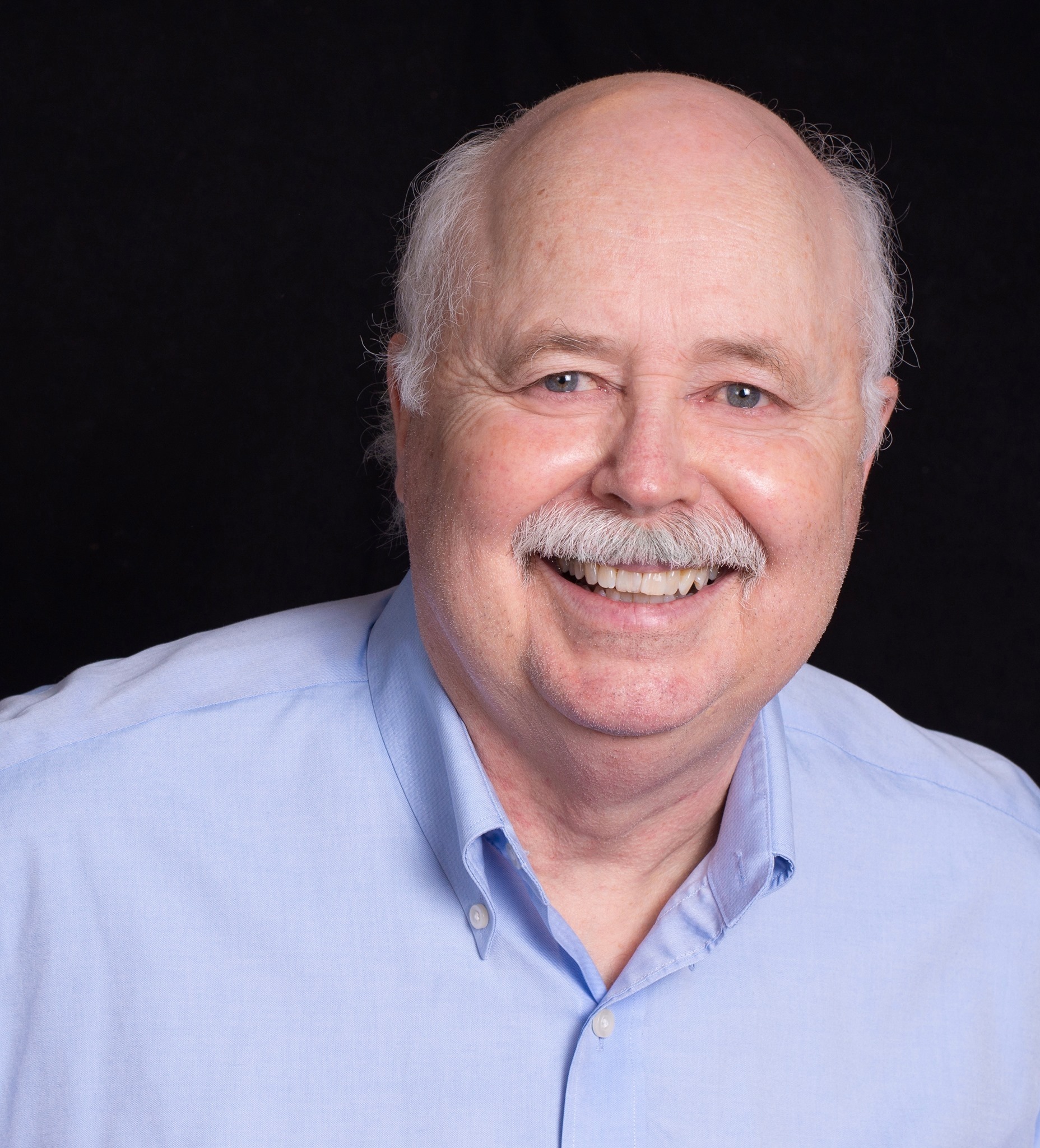
Mark Arnold is an American writer/blogger, sports fan, humanitarian and human rights activist. A lifelong resident of Seattle, Washington, he has devoted his whole adult life to helping others and improving conditions. He invites communication from readers and can be reached by e-mail at mark@fromanativeson.com

3 Responses
“To sin by silence when they should protest makes cowards of men.”
Ella Wheeler Wilcox
Love this. and from early 1900. says a lot.
Thanks Mark, Clear ,cogent and relevant.
You’re welcome, Roger! Just trying to do my best to stem the encroaching tide, which I’ll keep doing as long as I’m alive.