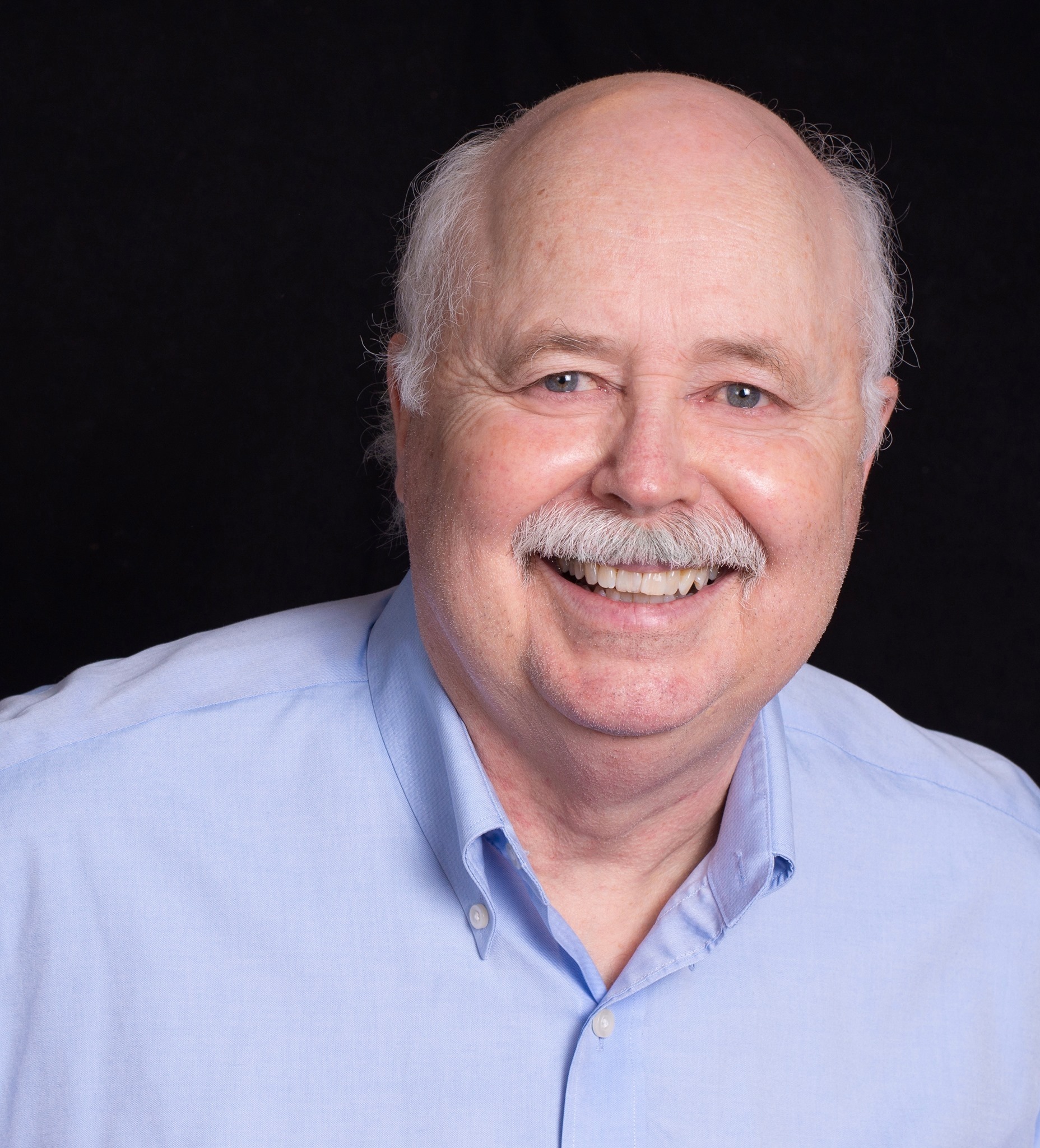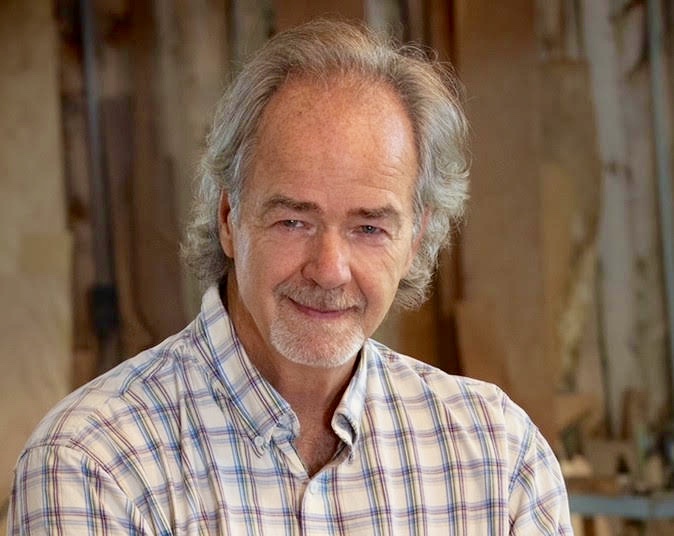
I knew of Richard P. Weigand (his friends call him Dick) before I met the man, as his reputation had preceded him. He and his wife Judy had moved to Seattle in the early 1990s, and I’d heard that he was an expert at helping people handle negative situations in their lives that were making them unhappy, holding them back; impairing their ability to reach their goals and be successful. He did this using a unique investigative technology based on a breakthrough about the subject of “logic”, which can be loosely described as the subject of “reasoning.” Whether we have studied the subject or not, we all innately use logic in our day to day lives as it is what our minds do when confronted with the various problems of life. It was this “logic” technology that Richard had mastered, and which keyed his success in helping people improve their lives. With it he could assist a person or a business to discover the real reason for their problem and so handle it. Back in those days I had the occasion to discuss with him such a problem in my life, and after getting all the data I could provide about it he made one suggestion to me. I instantly saw the truth in what he said and that was the end of the problem. From that point on Dick and I became friends.
Though he and Judy moved away from Seattle a couple years later, we stayed in touch through the years, with them eventually settling in rural Virginia while I continued my career in Seattle. Time went by, and then something happened that resulted in our friendship becoming the collaboration that it is today—the Covid 19 pandemic. With the country shut down as a result, and governors in various states (such as Washington) taking it upon themselves to suspend our rights to attend church and worship as we wish and to peacefully assemble, as well as the censorship of free speech on social media platforms of anyone with “divergent” views about the source of the Covid 19 virus and/or its treatments, there was much happening in our nation that concerned me. Throw in the George Floyd/Black Lives Matter riots of the spring and summer of 2020 on top of everything else, and it looked like the country was coming apart at the seams. I began to research and write about the reasons I discovered for what I was observing and to share my papers on my blog and with friends. Consequently, Dick and I got back in touch and began sharing our observations. Every now and then he would e-mail me a paper he’d researched and written, often illuminating subjects like the destruction of our educational system, how social engineering is accomplished, and the take over of medicine by the pharmaceutical industry. I would edit the papers for him, in the process reading them, and then e-mail them back to him. As I’d personally experienced 30 years before, Dick’s understanding and use of the unique technology of logic he’d been trained in, lent to his work a depth of understanding rarely found, though desperately needed, in what passes today for investigative journalism.
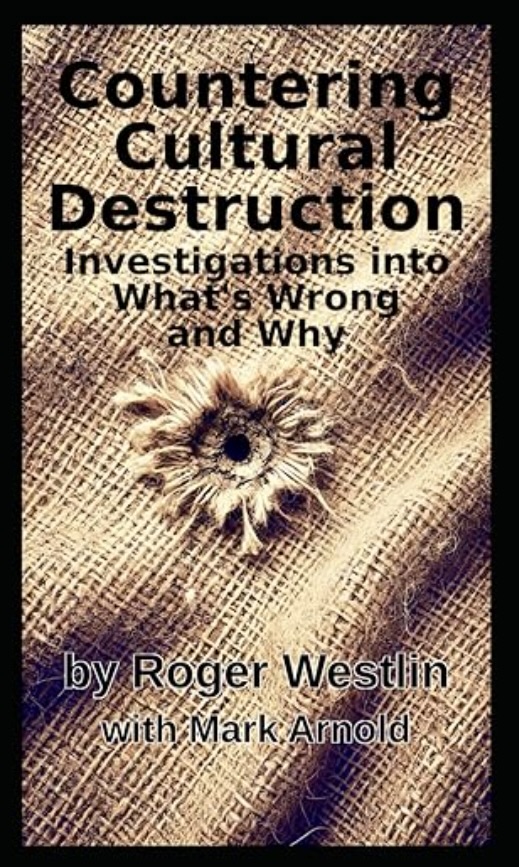
After reviewing five or six of these papers I came to the conclusion that they needed to be published more broadly, and so in the summer of 2024 I made the suggestion to Dick that we take the papers he’d sent me, plus a few others he’d told me about, compile them into a manuscript and publish them as a book. He ultimately agreed, so that is what we did, with me doing the manuscript preparation, editing and publishing and Dick doing the researching and writing. The title we chose for that book is “Countering Cultural Destruction,” and it today can be purchased through Amazon, though under the pen name “Roger Westlin” instead of the “Richard P. Weigand” by-line he uses now. At the time he hadn’t fully embraced the idea of being a published author—now he has!
After CCD was published Dick began experimenting with writing poetry, and one thing you need to realize about the guy—he does nothing half-way. Soon poems were flooding from his pen embracing all kinds of subjects, but especially the plight of children facing today’s suppressive educational system. The result of this was the publishing of “Your Voice Matters Most,” a volume of Dick’s poems intended to help parents and children in dealing with the social and education situations inevitably encountered in today’s world, where schools have lost their way amidst the onslaught of psychology driven false information and propaganda. This book is also available on Amazon, and I encourage anyone, whether parents, teachers or counsellors, to get it and read it.

Following YVMM, in mid 2025 Dick embarked on the project that is the primary subject of this piece, the researching and writing of a series of books detailing the ancient Japanese Samurai Code of Bushido, but with the special twist of bringing it to application in today’s world. As of April 2026, all of these books (there are four of them) have now been written, published and made available on Amazon in paperback and Kindle formats. I can tell you with certainty that they are completely unique, and I’ve not seen anything like them. To understand what Dick intended in writing them it’s best to get it from his own words and explanations, and you have that in what follows.
First, when I asked about what led him to the subject of Bushido, he stated:
“All roads once led to Rome. In life they tend to lead to ethics. Every area of living, whether personal, professional or societal, rests on three elements in some form—reasoning, application and record.”
In clarification, he went on to say:
“We determine what is right or workable (ethics); we apply that understanding in action (technique); and we observe and record outcomes, adjusting as needed (administration). All three are necessary for survival and progress. Ethics comes first because it determines direction. Without it, application loses purpose and the results become difficult to interpret.”
In explaining further, Dick returned to the subject most near his heart: children and the faulty education system. The path to Bushido, he said, “…began with a simple observation. Many children were not being educated to think or apply. Looking more closely, a shift became visible. Practical application—learning how to use knowledge—began to fade from public education in the mid-1960s. Just prior to that, schools had removed their only broadly shared moral framework with the exclusion of religion. Whatever one’s view of religion, it had functioned as a common reference point for conduct. When it left, nothing clearly replaced it.”
From there Dick examined twenty prominent, recent news stories, and saw that each, when traced back to its source, revealed the same pattern:
*A failure of judgment.
*A failure of responsibility.
*A failure of ethics at some level of decision-making.
He then told me that in looking beyond the headlines, he examined numerous smaller, everyday situations, which, though different in detail, shared a common structure: circumstances that could have been handled—often simply—through clear ethical reasoning, instead escalated, compounded, or were avoided altogether. “Over time,” he then said, “a consistent conclusion emerged: Ethics had moved to the margins. Yet, ethics is not abstract. It is not owned by institutions or assigned to others. It is one’s own reasoning applied to life. It depends on:
- the data one accepts
- the logic one uses
- the conclusions one draws
Each of these remains, fundamentally, a matter of personal responsibility.”
For Dick, all of this led to a practical question: “Is there a form of ethics,” he wondered, “not bound to a specific religion—one that can be understood and applied anywhere, without institutional constraint?”
That’s the question that led back to something long familiar to him: Bushido-The Code of the Samurai. Regarding the Code, Dick makes the point that, “The way of the samurai was never only about the sword. It was about the soul. Centuries ago, warriors lived by Bushido—a code of discipline, loyalty, and quiet courage. Their true strength came not from force, but from self-control and honor. For decades, it had stood out as a clear and disciplined code of conduct—direct, actionable, and rooted in responsibility. Seen in a modern context, it reads almost as a contrast to many prevailing patterns. Where it emphasizes duty, restraint, and honor, much of contemporary culture moves in the opposite direction.”
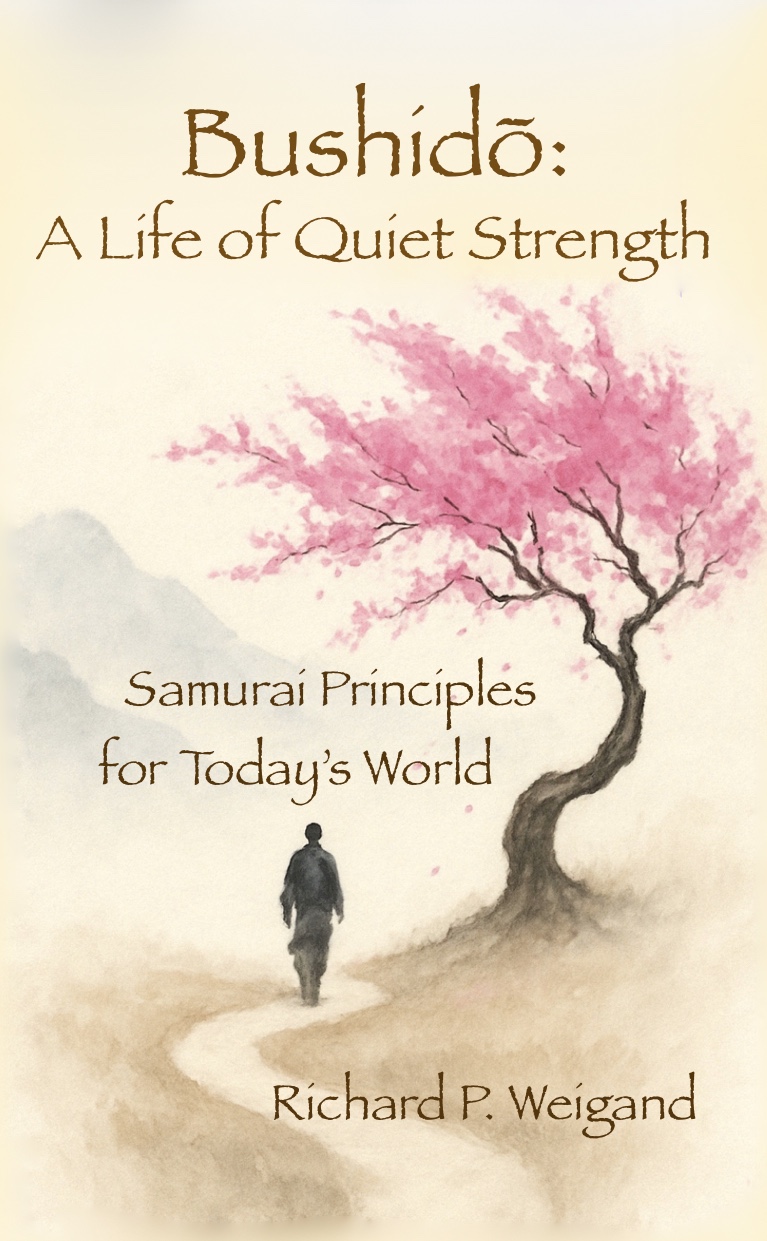
The result of the track just described was the writing and publication of Richard P. Weigand’s “Bushido: A Life of Quiet Strength,” released on Amazon in October 2025. Summated in the Author’s note at the beginning of the book, its whole purpose is to provide a living path for today. The Author’s Note further states, “…Whether you’re seeking strength, clarity, purpose or peace, these tools are offered as tools for living with quiet strength in a noisy world.”
I think when you read the book, you’ll agree that Dick accomplished his purpose in writing it.
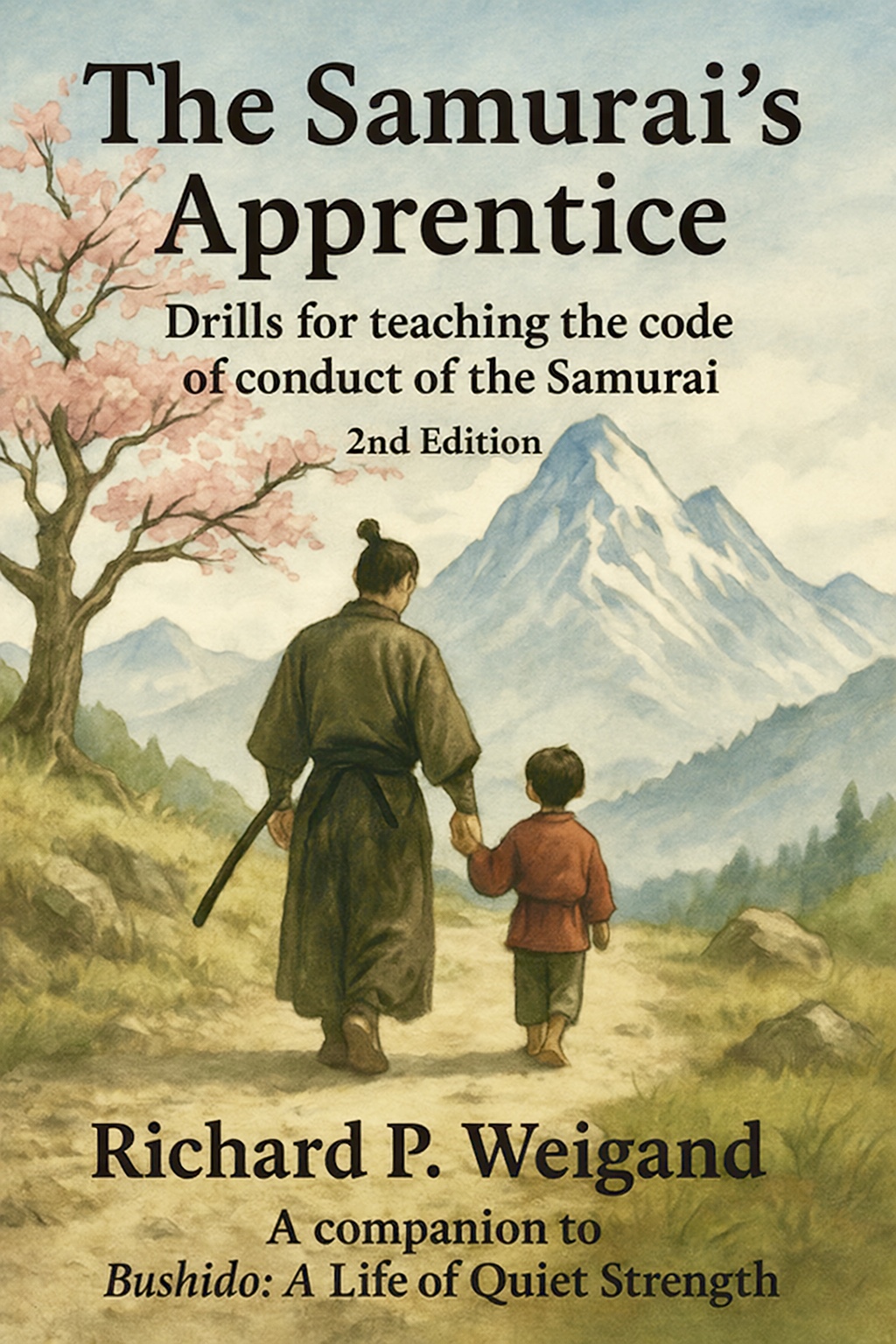
As to the other three books in the series, they are the result of confronting two separate problems: the first being the education of children to provide them with a proper foundation for facing and dealing with life’s dilemmas. Thus, Dick wrote a companion to “Bushido-A Life of Quiet Strength” entitled “The Samurai’s Apprentice-Drills for Teaching the Samurai Code of Conduct,” for the purpose of helping parents, teachers, children, or anyone wishing to help children, in teaching the Code’s lessons to young people.“The Samurai’s Apprentice” was published in early December 2025 and is also available on Amazon.
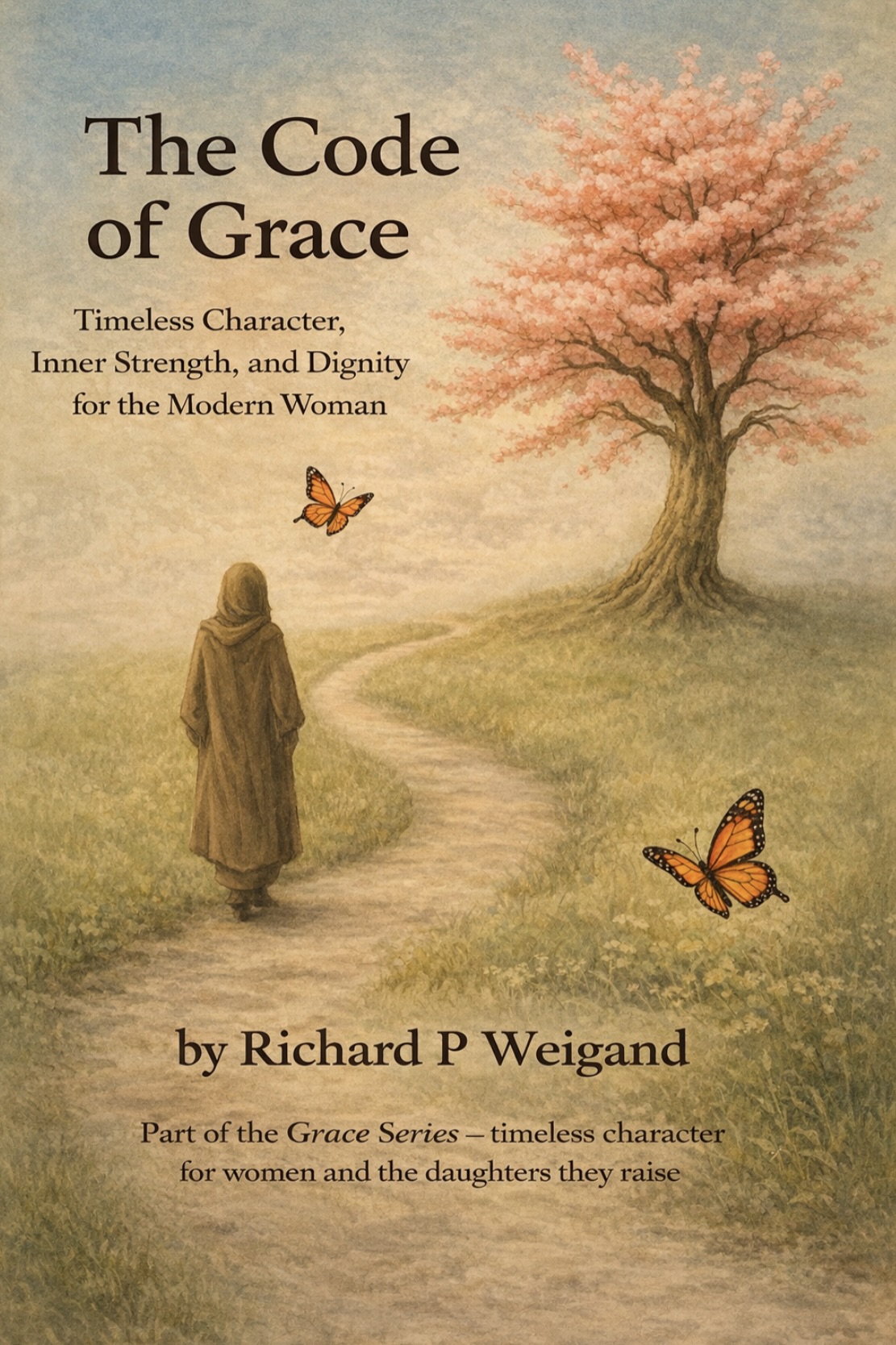
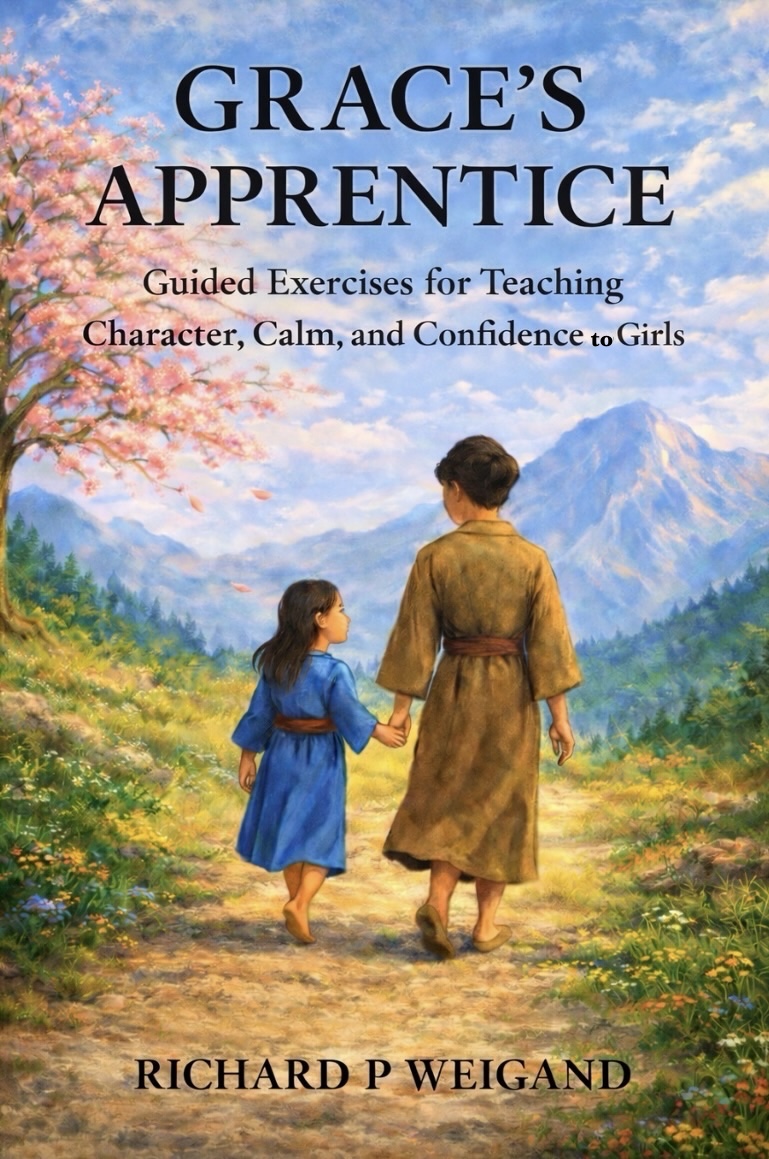
The second problem Dick confronted was called to his attention by a woman who read his Bushido book and noted that it and the Samurai Code had distinctly masculine slants. On having the issue pointed out Dick instantly recognized the validity of the problem, got to work and produced two more books, the first entitled “The Code of Grace-Timeless Character, Inner Strength and Dignity for the Modern Woman” which is the Bushido Code tailored for women, and the second entitled “Grace’s Apprentice: Guided Exercises for Teaching Character, Calm and Confidence to Girls,” which accomplishes the same thing for young girls and the parents and teachers of girls as does “The Samurai’s Apprentice” for boys.Published on 1 March 2026, “The Code of Grace” is also available on Amazon, as is “Grace’s Apprentice,” which was published just a month ago on 30 March 2026.
As an aside, with 6 books published in just 18 months, and four of them in the last 6 months alone, I can honestly say that I have never seen or been associated with such a prolific writer, or one as dedicated to doing all he can to offset the forces of cultural destruction now besetting our nation. He and I have discussed this many times, and I can tell you that the purpose behind his books, research and writing is pure and unalloyed. If this purpose is one you share, then Richard deserves your support. Buy his books and do all you can.
And lastly, I’ll leave you with these closing comments from Richard himself:
“Ethics, at its core, is reason applied to life. Because of that, it is not fixed or distant. It can be examined, improved, and strengthened. The aim of the Bushido series is not to impose a system, but to provide a clear starting point—principles that readers can use to think through difficult questions and act with greater clarity. From there, each person determines their own course.” RPW
Visit Richard P. Weigand’s website
Buy Richard’s Books
Bushido:A Life of Quiet Strength-https://www.amazon.com/Life-Quiet-Strength-Samurai-Principles/dp/B0FXWMW18H/ref=sr_1_1?crid=3FRBHZTH3BENK&dib
The Samurai’s Apprentice: Drills for Teching the Samurai Code of Conduct https://www.amazon.com/Samurais-Apprentice-Teaching-Samurai-Conduct-2nd/dp/B0GDFMJMTV/ref=sr_1_2?crid=3AYV8ATTP3TBD&dib=
The Code of Grace: Timeless Character, Inner Strength and Dignity for the Modern Woman: https://www.amazon.com/Code-Grace-Timeless-Character-Strength/dp/B0GQSN8F68/ref=sr_1_1?crid=28FKH0MN18C3Q&dib=
Grace’s Apprentice: Guided Exercises for Teaching Character, Calm and Confidence to Girls: https://www.amazon.com/Graces-Apprentice-Exercises-Character Confidence/dp/B0GVJ64YT8/ref=sr_1_