The country of Canada has been in the news lately. Whether because of Trump’s announced idea to make our northern neighbor the 51st state (which I think is ridiculous); the Trump Canadian tariff situation, or the recent Canadian national election Liberal Party victory with its candidate Mark Carney becoming Prime Minister, which in turn has revitalized a separatist movement in the provinces of Alberta and Saskatchewan, a lot has been happening above our northern border. Personally, I’ve been a fan of Canada for a long time, not its politics, but its people. The story that follows explains why…MA

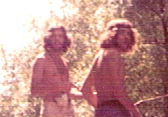
Many years ago, when I was young and foolish, my good friend Bruce Anderson and I, hippies both, decided we wanted to hitchhike across the country, from BC to Ontario, but our idea came a-cropper at the Blaine border crossing when the Canadian border people wouldn’t let us in to the country. I think the appearance of two scruffy looking dudes, with no car and $5 cash between them, was a deal breaker for the border guards. Undaunted, we u-turned and headed back to Seattle, where we crashed for the night and then took off the next morning, hitchhiking east across the good ‘ol USA—the $5 still between us. Four days later we rolled into New York City, none the worse for wear, courtesy of two Black guys who picked us up and insisted on enlightening us on the ways of the big city: what to avoid and how to stay out of trouble. This was back in late August of 1972, and it was hot in the Big Apple, perhaps sultry is a better word. For the next two days we sweated a lot while seeing that town from the bottom up, using a Greenwich Village youth hostel as our crash pad.
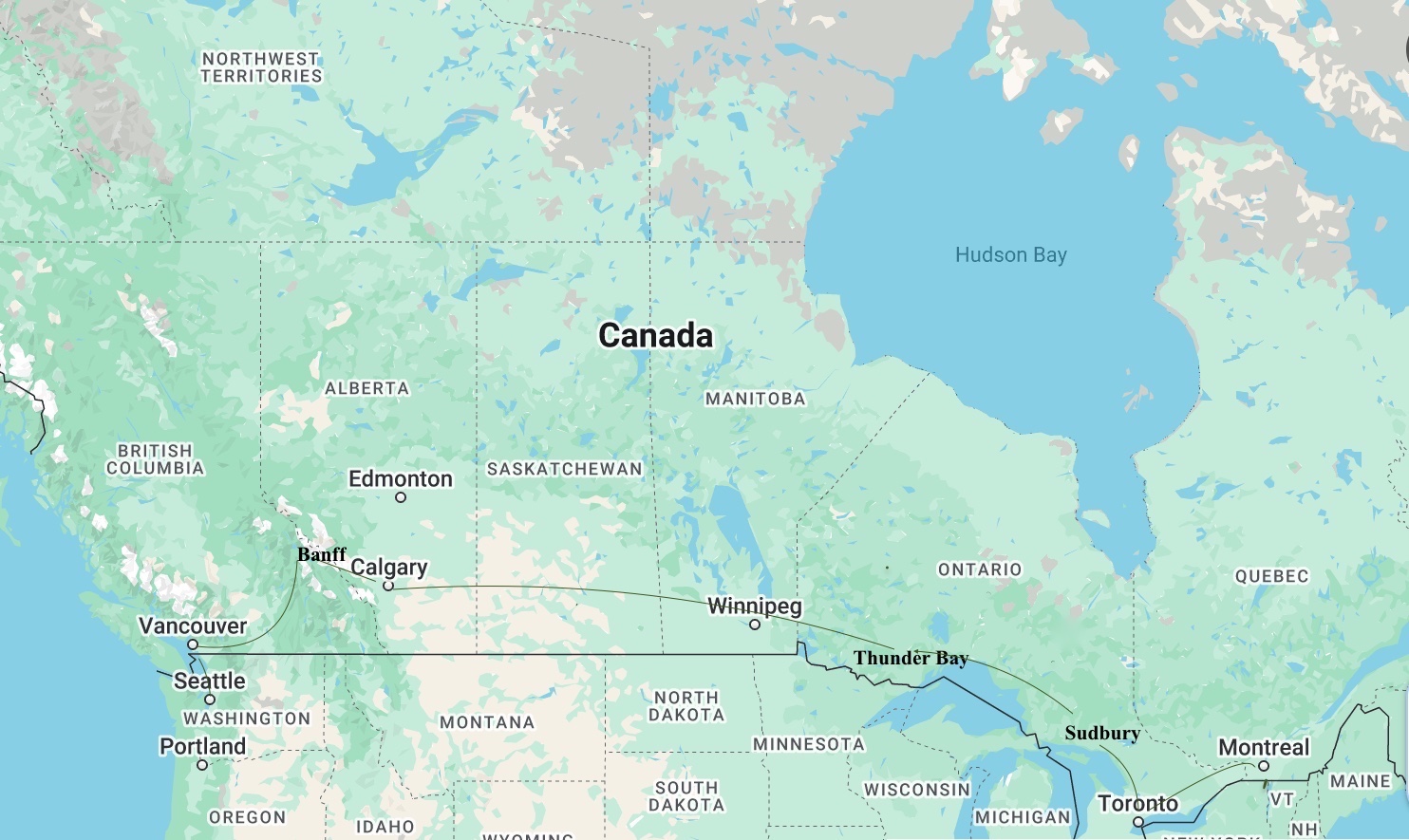
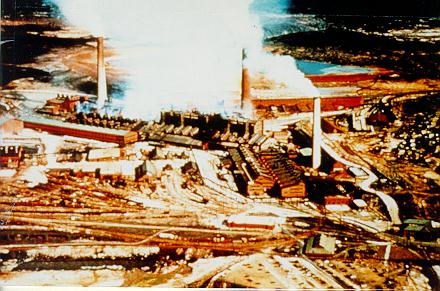
When we’d seen enough of New York we took off again, heading north out of the city, hitchhiking our way through New England toward the Canadian border. For whatever reason, getting into Canada was far easier than it had been a few days earlier at the Blaine crossing, perhaps because this time we took a Vermont back road into the country instead of a highway. The border guards barely noticed us, and before long we were thumbing our way west toward Toronto, where we were taken in by some kindly Canadians, fed, and given a good night’s sleep. The next morning we were off again, hitching our way north, our goal being to skirt the northern shores of the Great Lakes until we reached the town of Thunder Bay on the western shore of Lake Superior. To get there we passed through the town of Sudbury, just a little north of Lake Huron, and witnessed a landscape denuded of vegetation, the result of nickel smelters in the area, the pollution from which killed all the trees. In a country ordinarily so lush with flora, Sudbury was a stark reminder of the effect irresponsible industry can have on an environment. I’ve never forgotten it.
After leaving Sudbury we continued to push west, making it to Sault Ste. Marie by evening, where we crashed for the night at a makeshift shelter that let us sleep for free. While there we encountered a young guy from Quebec who spoke with a strong French accent. Bruce nicknamed him “Frenchy,” and for an hour or so he bent our ear, avidly advocating for Quebec’s secession from Canada. We listened to what he had to say and appreciated his earnestness, but lacked much reality on the issues he was raising. After “Frenchy” wound down we retired to our sleeping bags for the night, and the next morning we were off again, making our way north, then around the top of Lake Superior and down its west side, ultimately arriving at Thunder Bay late that afternoon. To give you some understanding of the distances involved on a trip like this, from the point we crossed into Canada (just south of Montreal} to Toronto, is a distance of 330 miles; from there to Thunder Bay is 850 miles. To that point on our Canadian cross-country trip we’d logged over 1100 hitchhiking miles in Canada alone, but that would be dwarfed by what were about to undertake—1350 miles on the Trans-Canada Highway across the Canadian great plains to Banff in the Canadian Rockies; from Banff back to Seattle would be another 600 miles, making a total of over 3,000 miles on this cross-Canada trip.
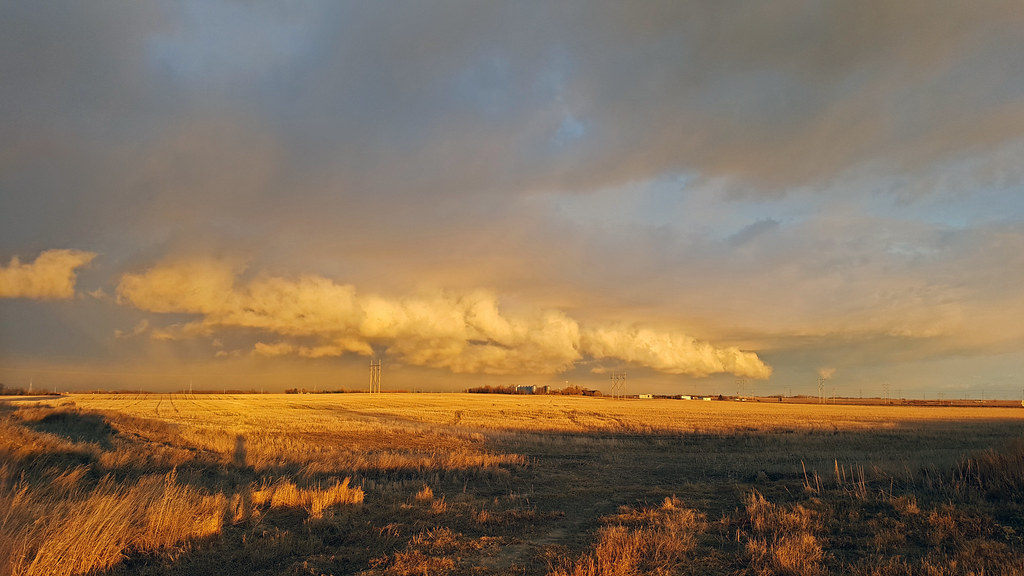
At the top of this article I mentioned that I was a fan of Canada and its people, and when you realize that on a trip like this you meet a lot of those people, and that in our case they were uniformly gracious and generous with rides, lodging and food, and all at no charge, you can certainly understand why I’d feel that way. The people were amazing then, and looking back across the years, I still feel that way, typified by the guy who picked us up on the outskirts of Thunder Bay and gave us a ride across the provinces of Manitoba, Saskatchewan and Alberta, all the way to Calgary, the gateway to the Canadian Rockies and Banff National Park. It was on that trip across the Canadian plains in 1972 that I began to appreciate the paradox that is the country of Canada. If there is a word that describes the Canadian plains, that word would be “empty.” There are, of course, scattered little towns and occasional cities like Regina, but for the most part, as we travelled the plains of Canada, we were struck by the fact that there is nothing there. The prairie, of course, has its own kind of beauty, but the country, by and large, was empty. In 1972, in a country slightly larger than the United States by area, Canada had only 1/10 the population of its southern neighbor: just over 20 million to just over 200 million for the U.S. That ratio roughly holds true today, with Canada at just over 40 million people and the U.S. having 350 million.
In terms of natural resources, the very plains provinces we were crossing in 1972 were then, and are now, loaded with oil, natural gas, minerals, and the rich prairie soil lends itself well to agriculture, especially wheat and cattle. The provinces of Alberta and Saskatchewan are today responsible for 95% of Canada’s oil production (which is Canada’s biggest export) and a huge portion of its wheat and beef production. With that economic engine sitting right in the middle of the nation, one must wonder why it is that these very two provinces, Alberta and Saskatchewan, are both today, according to reports, considering separation from Canada. In answering this one should realize that the idea of Canadian provinces seceding from the nation is not new. Earlier in this article I mentioned our encounter with “Frenchy” who enlightened us on the necessity of Quebec secession, and in Alberta the notion has been bantered around for at least 50 years. Lately, however, the movement has been gaining steam, especially since the election of Liberal Party candidate Mark Carney as the nation’s prime minister. Carney is a globalist international banker with strong connections to the World Economic Forum and the Bank for International Settlements, and to many Albertans he represents more of the same of what they suffered through under the Justin Trudeau regime for the last 10 years.
One of their objections stems from the perceived failure of the government in Ottawa to support building pipelines and other infrastructure to assist the oil industry in Alberta and Saskatchewan. This is especially aggravating to them because of Canada’s socialist “equalization program,” in which the more prosperous provinces, such as Alberta and Saskatchewan, are mandated to pay money to the federal government, which funds are then apportioned out to the less prosperous provinces, to “equalize” the economic situations of the individual provinces. In fiscal 2024 Alberta paid $26 billion in equalization payments to the government, while a province like Quebec received $13 billion and contributed nothing. To Albertans they are being penalized for the time, effort and production in developing their local economy, and they are right. Many of them are reaching the end of their rope. As a general comment on economics, socialism and communism as economic systems never last long as they violate a very basic economic law. Stated quite simply, that law is that if you penalize production and reward non-production, you get non-production. Thus, whether in a company or a country, one should so run things as to reward those who produce and penalize those who don’t. To boom an economy, it’s a question of what must be incentivized, and the answer to that is that you incentivize production. When that law gets violated, whether in large scenarios or small, injustices and inequities result, and that is what is happening within Canada right now, and is what is at the bottom the Albertan passion toward separatism.
Well, my friends, to get back to our trans-Canada hitch hiking trip in the late summer of 1972, after spending a couple of days in Banff the weather turned cold and the snow line descended to just a couple hundred feet above our camping elevation. Bruce and I knew it was time to get back to Seattle, so that’s exactly what we did, making short work of the 600 miles. Apparently the Blaine border crossing works better, if you are a U.S. citizen, going from Canada to the U.S. than the other way around, as this time we had no problem crossing the border, and we rolled into Seattle in the afternoon, a day after leaving Banff. Summer was coming to an end, and so was my wild and free hippy life, for I had decided to get a job and become a productive member of society. Go figure! But I’ve never forgotten that trans-Canada trip and the beautiful Canadian people, who took care of us and treated us so well.
And I should mention, that after 7,000 miles and nearly 3 weeks on the road, we still had that $5 between us.